




Money Madness : Our darkness around money

Posted on September 30th, 2008 in Money Madness | 1 Comment

The Big Sur sky!  I cannot believe the vastness of it, the way the moon lights a path on the ocean towards me at night and the way that path is illumined again at sunset.   Most distinct are the twinkling stars, the Milky Way, and the shooting stars (so present in August).   What produced this fantastic light show that was opening my heart and mind with inspiration and magic?  Darkness.  And yet our modern ways have produced enough pollution and artificial light to minimize the darkness and the natural spectacle that is right above us every night.

What does all this have to do with Money Madness?

Just as the darkness allows us to enjoy the light of the stars, if we open to our darkness around money, we can live a life free of financial worry and adrenalin.  What are the feelings that arise when money is the topic?  Is it the fear of not having enough or the fear that we are not enough?

What’s behind our drive to spend, accumulate, invest for a big hit, or buy a lottery ticket?  What darkness did we learn to avoid as a 5 or 6 year old and learn to overlay as an adult with a money thought?

The goal is not to change our behavior around money, but rather to open to the “dark” feelings that seem to mechanistically trigger us to do something unproductive around money.  The more we befriend these feelings, the less overwhelming and important they are, and the more we can access our natural money wisdom.  Maybe this wisdom, independent of our culture, parents and friends, will lead us to make the same money decision, but it will feel like a true and vibrant choice because we will no longer be dealing with money in a habitual way.

Moving to a non-habitual relationship to money allows the stars or the wisdom of our beings to shine brighter.  As we free ourselves of money madness, we discover that the whole world of money can be understood and successfully mastered just by using our own wisdom and common sense.  We don’t need to listen to television money experts or read every finance book or get an MBA; we need to allow the darkness to reveal the brilliance of our minds without Money Madness.

A nice blog about Big Sur :

Big Sur California – Big Sur Campgrounds, California Last summer my mom, my little sister, my best friend Ramo and I went on vacation to California. It was the first time any of us had ever been to this ama.

A blog about money behavior :

My son wants to give money to beggars — but I give plenty at work … – He said, “But you said it was my money to do what I wanted with and I want to give it to that man. We have loads of money and he has none.” He looked horrified by my callous behaviour. I said, “OK.” Fair enough — it was his money and …

Cure Money Madness : Are you worried about your retirement?

Posted on September 30th, 2008 in Investing, Retirement, Uncategorized | Leave A Comment

My great-grandparents didn’t think much about their retirement. Neither did yours. Chances are they didn’t have one.

The whole idea of retirement is fairly new (except for the very rich, of course, who always lived a life of retirement). Before the Social Security Act of 1935, most people worked till they were no longer physically capable of doing so, then got by on savings, help from family members, or perhaps a pension, which, given the life expectancy at the time—about 60 years old on average—usually sufficed for any remaining years.

Social Security provided the guarantee of an insured income for the post-work years of life, and then came all the advances in healthcare that have extended our lifespan, and what do you have? A marketing opportunity for the producers of financial services—the newly minted phenomenon of “retirement planning.”

That’s what’s behind all those richly filmed, vibrantly scored, emotion-stirring, heart-pounding commercials for retirement funds. You know the ones I mean: a fit, good-looking couple in their fifties is flying off to some spectacular lake in a part of Alaska reachable only by private bush plane—he fishes, she photographs—as the husband announces that “when we retire, we’ll take trips like this all the time.” Or an equally fit, equally good-looking couple in their sixties is on the tee of some spectacular golf course in a part of the Caribbean reachable only by private yacht—they both golf—as they exchange a glance that tells us that once this hole is played, they’ll be off to the condo for some passionate afternoon love-making.

It’s a whole new fantasy: in retirement, we’ll live even better than we do now! We’ll be better-looking! We’ll fly to exotic destinations! We’ll have so much leisure and fitness that we’ll be making love with the vigor and excitement of 20-year-olds!

Moral? Do whatever it takes to grab the money bonanza now so we can really live later!

In a marketing minute, the retirement income once seen as a blessing for working families has become yet another arena of money madness. The guarantee that once blunted our anxiety about getting by in the last years of life has now become fertile territory for all kinds of new stress: how much money will I need to reach this golden lifestyle I’ve seen only in ads? how and where will I get that kind of money? Better work harder/sacrifice more/defer pleasure today/make the killer investment so I can make the grade.

But when a fantasy about tomorrow makes your life today seem worthless by comparison, and when you find yourself making one sacrifice after another to achieve that fantasy, it’s time to re-think the retirement game.

What kind of retirement do you really want? (By the way, not one of my wealthy clients ever “retires;” they all just change the shape of their engagement with life, although, granted, they have the wherewithal to do that.) More to the point: what kind of life today do you want?

I’m reminded of the old story about the wealthy ship owner who returns to the little fishing village where he was born to live out his golden years. One day on the beach, he sees a young man lazily fishing, and he gives him a lecture. “Why, when I was your age, I had ambition and enterprise. I worked hard, bought a boat, fished round the clock, bought another boat, then  another. Today, I am the owner of a fleet of ships, with enough money to do exactly what I want.”

“And what is that?” the lazy young man asks.

“To come back here and fish”—the ship owner gulps—“just like you.”

Moral: if you want to kick back and fish, think about doing it today—and consider how much of a fleet you really need to own first.

Here are some recent posts about retirement, and resources for you to explore :

Baby Boomer Retirement: Falling Stocks Crush Boomers’ Retirement … – Some people can’t wait for the day they retire, but 49-year-old Christiana Drapkin is relieved she’s not at the finish line yet after the rout on Wall Street ravaged her retirement savings.

All About » Blog Archive » Retirement Strategies for Employed … – That is why there is a large gap between men and women when it comes in retirement. This is due to fact that they are less inclined in participating on retirement plans which their employer has provided for them. …

Treasury Looks Into Retirement Pay of Ex-Bank Chief – Mergers … – DealBook is a financial news service reporting on mergers, acquisitions, venture capital and hedge funds and is produced by The New York Times.

Retirement Plans | The Big Picture – The whole idea of ‘retirement’ was invented by politicians to reduce the pool of idled laborers which always result from government meddling in the markets. People who don’t have jobs have lots of time and inclination to separate …

How Much is ‘Enough’ for Retirement? – General * US * News * Story … – Retirement plans for many are in jeopardy. Understanding the problem is the first step to recovery. Remember: There’s no such thing as too much savings.

Rightsizing your retirement | csmonitor.com – As the stock market sags, retirement savers must revisit their long-term options.

Market crash may postpone Retirement by almost six years [and some … – Canada’s trusted source for national news, financial news, world news, commentary, entertainment and sports.

Survey Highlights Shift in Retirement Concerns – Life’s pleasures have taken a backseat as money worries cause concern among pre-retirees.

Retirement planning in your 40s – Maximize workplace retirement plans and don’t invest too conservatively. Skimp on college savings if necessary.

Dashed Dreams of Retirement – Popping open a beer at his dining room table, Sunoco refinery worker John Read signed the last document, slipped his retirement paperwork into an envelope, and began to dream about the future. “All the things I could do, all the things …

Money Madness and Real Estate

Posted on September 29th, 2008 in Investing, Real Estate | Leave A Comment

Jaclyn is one of the smartest women I know—and certainly one of the savviest real estate investors. Her investing success made her a wealthy woman, and she lived like one, in a sprawling, high-tech house, valued at $2.4 million, that she shared with her husband, and three stepkids. Then about a year ago, just as the real estate market was starting to skid, and with two of the kids now in college, Jaclyn and her husband sold the $2.4-million house and “downsized” to a one-million-dollar establishment. And just recently I learned that Jaclyn had sold the million-dollar-house, at something of a loss, and was hoping to rent a little place somewhere.

I was sorry to hear it, but I didn’t need to ask the reason. Clearly, with her money tied up in a portfolio of properties that were fast losing their value, Jaclyn needed cash simply to stay afloat.

“How did you escape making a similar mistake?” my wife asked after I had told her the sad news about Jaclyn.

“I learned the lesson at my mother’s knee when I was seven,” I replied: “’Don’t put all your eggs in one basket.’ Didn’t you hear that when you were a kid?”

Janine thought for only a second, then nodded.

Of course, we all learned it. In my case, I think it was when I finally got tired of always being assigned to right field when we played baseball at school. “Maybe you should try another sport,” my mother suggested. “After all, you shouldn’t put all your eggs in one basket.”

I would hear the same dictum when I devoted so much time to studying math that all my other grades suffered. And when I got on an ice cream kick and wouldn’t eat anything else. And when I developed such a crush on the tallest girl in sixth grade that I had no eyes for anyone else. “Don’t put all your eggs in one basket,” my mother repeated as I sank into each of these disasters. “Keep your eye on the big picture. It’s a varied world out there.”

That is precisely what Jaclyn forgot. A business school graduate and an expert in all the complexities of real estate investing, she neglected this simple wisdom from childhood—and she put all her investing eggs into the real estate basket.

Does this mean that investing in real estate is a bad idea? On the contrary. It is a very good idea. As investment categories go, real estate, over ten-year periods, is typically a very good investment. What’s more, through the power of leveraging, real estate investing offers the potential advantage of “multiplied” gains, although that entails the risk of multiplied losses as well. That is, if you borrow money to invest in real estate—as most people do, putting up a portion in cash and the rest as debt—your returns are magnified on both the upside and downside. If the property increases in value, your gains are greatly multiplied because you’re getting a return on the whole amount invested, even though you only laid out a small portion from your own money. But if the property decreases in value, your losses are also multiplied: you’re responsible for the debt as well as the lost value.

That’s what happened to Jaclyn. And it happened, not because she was naive or because real estate is a bad investment; neither is true. It happened because she forgot the childhood wisdom about not putting all your eggs in one basket. In investment terms, she concentrated all her resources in only one asset class; that’s why she’s hurting today.

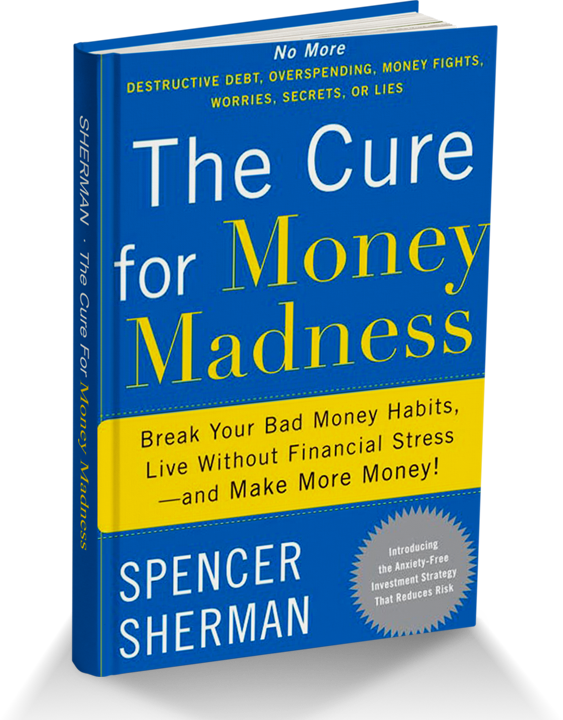
What’s an asset class? Here’s how I define it in my upcoming book, The Cure for Money Madness: “An asset class is simply a group of investments with similar characteristics such that the investments behave the same way in the marketplace.” Specifically, the companies have similar size and growth characteristics, and so they behave similarly as investments. Large, fast-growing companies—Microsoft , Nissan, General Electric, and FedEx, for example— behave similarly to one another, even though they represent different industries. By the same token, small, slow-growing companies behave, as investment assets, like other small, slow-growing companies; stocks in small manufacturing companies, for example, no matter what the companies manufacture, tend to go up and down together.

So do real estate investments. They rise or fall in value as a class, as recent events illustrate: when mortgage money was readily available, demand for houses, to take just one example, outstripped supply; house values rose, and investors in housing made fortunes. As they did so, the investors’ tendency was to ply their gains back into more real estate investing, concentrating in this one asset class even more.

That’s what Jaclyn did, and for a good number of years, as her leveraged gains registered as nothing less than spectacular, plowing everything back into this one asset class must have looked like a good idea. Maybe Jaclyn grew giddy on this soaring wealth, and maybe the giddiness seduced her into concentrating more and more resources in these persistently rising investments. It was Jaclyn’s money madness gone wild; she was hitting not just home runs but grand slams on every at-bat, and it must have seemed to her that nothing could go wrong.

I think that kind of madness is just human nature. We stop thinking when we’re on a high; we stop seeing things clearly. By the same token, when we’re low, we see too sharply and narrowly, and think too much. If only there were a mechanism to keep us level—at least where investing is concerned: to stop us when we’re carried away by some infatuation or other, and to move us along when we’re stuck in a rut.

There is. It’s the Rainbow Portfolio™, and I created it for just these reasons: to stop me in my tracks when I get giddy and to keep me going when I get low. In both cases, the Rainbow Portfolio™ is a fail-safe mechanism that automatically reminds me of what I learned at my mother’s knee.

Had Jaclyn been a Rainbow Portfolio™ investor, for example, it would have forced her to take some of his gains and diversify into other assets—large- and small- and medium-cap stocks, international and domestic, value and growth stocks, commodities and bonds. Automatically, the losses she is suffering today in her real estate investments would have been offset, or at least mitigated, by gains from other investments. What’s more, instead of being forced to sell her family home, as she must now do, she’d be able to stay put, despite the house’s dwindling value.

That’s why ‘Don’t put all your eggs in one basket’ is the most basic, most profound, most important investment mantra there is. It even trumps that other classic, ‘Buy low, sell high.’ Another friend is a case in point.

I’ll call him Frank. Like Jaclyn, he was a real estate investment wizard. So stunning was his fast climb to wealth that he actually disdained the kind of investing I advise, and we used to kid one another about our opposing investment ideas—mine for multi-asset, passive investing, Frank’s for go-getter, highly leveraged investing in real estate.

Until the day, not too long ago, when Frank phoned to say he was desperate. Plunging real estate values were reducing his net worth steadily and substantively. He did not know where to turn or what to do. What could I advise?

“How much of your portfolio is in real estate?” I asked.

Frank did some quick figuring. “Ninety-six percent,” he said.

I gulped. “Sell,” I said.

“But I’ll lose a fortune selling at the bottom of the market!” Frank protested. Such an idea—selling low, especially after having bought fairly high—was simply anathema to him, schooled, as we all are, in the principle of buying low and selling high. It’s an important principle, but in Frank’s case, it clearly came in second to the eggs-in-the-basket principle. Simply put, it is better to sell low and diversify than to have nothing at all.

So I refrained from mentioning that Frank was losing a fortune anyway. Instead, I argued that with that much concentration in a single asset, he was looking not just at loss but at wipe-out. “The first thing you need to do is avoid total disaster,” I asserted, “and that means reducing your real estate allocation from ninety-six percent to fifty percent. That way, even though it’s painful to sell at a loss, reinvesting what you earn on the sale might very well make you more money in the future. So for now, sell.”

Two friends who hit fantastic heights with their investing have now plunged to unexpected depths. The fault was not in the asset they invested in but in the concentration on that asset to the exclusion of others. The fact is that there are some simple rules about money that keep us safe and, like smoke alarms, alert us to impending disaster. When our money madness makes us giddy, luring us into thinking we just can’t miss, it becomes easy to forget the rules—and such forgetfulness is fuel on the fire.

Jaclyn and Frank forgot the simple rules—and were badly burned. They abandoned the wisdom we all learned as children: in investing, as in all of life, it pays to embrace the world’s infinite diversity.

It’s a reminder that now may be a good time to count how many baskets your eggs are in…

Some blogs you might find interesting on Real Estate :


Real Estate Blog – Smart Tips for When to Buy a Home – Search for any article on real estate lately and you will read a lot of doom and gloom scenarios. While it is true that the real estate market is struggling overall, there are some top tips to consider before you purchase a home, …

Realty Times – Green Building is Growing Despite Down Market … – Real Estate News And Advice – Green Building is Growing Despite Down Market, According to Report from McGraw-Hill Construction. … Are Foreclosures a Good Investment? Investor Report: Avoid Over-Improving · Holiday Wish List …

Real Estate Blog – Smart decisions to make before investing in a … – Smart Decisions to Make Before Investing in Down Market Real Estate Sure, you want to invest in a down real estate market, but you want to do it smartly; being stupid got people into a lot of hot water recently and you are not stupid.

Money Madness : Friends At Work, But Not For Long

Posted on September 1st, 2008 in Money at Work | 1 Comment

Jeff and I had become good friends at work. He was a few years older and had put in more time at the brokerage house where I was just starting out, so in some ways, he was a mentor. But this was a real friendship, not just a “professional association” like so many relationships with work colleagues. I felt we were soul-mates under the skin, with everything important in common.

So it stunned me when, one day over lunch in Jeff’s office, he suddenly asked: “By the way, where did you summer?”

I grew up in middle-class Queens, a generation removed from the immigrant experience, and had never heard the word “summer” used as a verb. But I got it. Instantly. It was unmistakably a class code, and it was a shock to my system. In that single moment, I went from feeling intensely close to Jeff to feeling absolutely separated from him, as if a brick wall had just shot up between us. Soulmates under the skin? What was I thinking? I said to myself, when clearly, as a single word had revealed, we were as different as two people could be.

I am not the first person to feel the jarring sensation of class distinction. But my emotional reaction to this experience was something more intense-it was money madness.  In that moment, I fell prey to defining my self-worth in material terms. My money madness told me that a summer spent at the public pool in our Queens neighborhood was inferior in every way to the kind of summer experienced by people who “summered” in the Hamptons, or on Cape Cod, or along the coast of Maine. And if my summer was inferior, surely my whole year was; and if my year was, surely my whole life was; and if my life was, so was I. My money madness also insisted that money was identity, maintaining that Jeff’s identity and mine could not possibly form and keep a friendship.

It was too bad. The truth is that my boyhood summers at the municipal pool had been wonderful, and if I had not been the slave of my money monster, I might have been able to say to Jeff: “I summered in the neighborhood.”  I might have created space for us to learn more about each other. Instead, money madness ruled my behavior, insisting that Jeff and I should not be friends. It was painful.

But money madness will do this every time. It will make you uneasy with your identity, or unclear about what your identity is. And it will dictate how you connect with people. There’s a great story about two women who’d been close friends for 20 years. They knew everything there was to know about one another, had been there for one another’s joys and sorrows, could virtually finish one another’s sentences. Then one of the women confessed to the other that she didn’t exactly work at the Museum-that is, in the sense of having a job there. It was rather that she visited there often because she donated so much money to the Museum out of her enormous trust fund.

That was the end of that friendship, as the woman who received this information wondered what else had been held back or fudged or lied about over the past 20 years. We can only marvel at the trust-funder’s 20-year discomfort with her own money situation, even as we pity her for letting that discomfort break faith with a friend.

The irony is that there is also financial danger in letting your money madness rule your relationships. In that first brokerage job, I saw myself as less worthy because I had grown up middle class and had never “summered,” and it led to behavior that influenced others’ perceptions of me. When my colleagues headed for the nearest watering-hole after work or went out for a boisterous lunch together, I hung back. I saw myself as different, and I believed the difference made me less. It affected my performance on the job. After all, how could I look to new money associations when I was still hung up on past money associations? I was the kid who summered in the municipal pool in the neighborhood. How could I possibly make the kind of money the Jeffs of this world make? How could I even be comfortable around people like that? There’s also irony in the fact that, most likely, I wasn’t the only person in the firm for whom summer meant the municipal pool, not Martha’s Vineyard.  Not only was my sense of otherness damaging and dysfunctional, it was probably inaccurate.

A friendship sundered, a job gone sour and my self-esteem thrashed. I was 25, and the score was Money Madness 3, Spencer 0.

More on money in the workplace :

Bringing the spirit of giving to your workplace « A Different Kind … – “Despite the difficult economy, 74 percent of companies plan to participate in charity efforts this holiday season — donating money, food, clothing, gifts, volunteering,” says Dale Winston, chairwoman and CEO of the New York-based …

A Sense of Humor is Worth Big Money in the Workplace « Personal … – Today, I spoke to Adrian Gostick, a bestselling author, who gives us a lesson in the importance of humor in the workplace. He has some excellent and eye opening research for you that proves people need to loosen up in the workplace in …

Workplace Communication = Money! – Has your company had a continual turnover of employees or a problem with workplace productivity? Does your company promote productive employee communication? These are extremely important questions to ask and answer. …

Will Obama transform the American workplace? – It may still be two months before he is sworn in, but President-elect Barack Obama could prove a transformational leader when it comes to reform of the American workplace. —- link MoneyTalks: The Best Money, business, finance blog …