





As the Economy Falters, Marriages Stumble

Posted on January 21st, 2009 in Couples, Excersises, Money Madness | Leave A Comment

As the stock market tumbles, relationship woes soar. According to numerous studies, money is the number one cause of divorce in the U.S.

Now more than ever, couples are facing a huge challenge:  How to keep their marriages and relationships healthy in an ailing economy. Financial stress saps couples of intimacy and trust. Many lack the skills and the willingness to talk openly about such a sensitive and difficult subject.

Spencer Sherman has created a unique method for couples to achieve “Financial Intimacy” and begin the process of talking about money openly and without blame and shame. His simple techniques allow couples to realize the true value of their partner, and achieve calm through the ups and downs of their balance sheet. Learning to eliminate secrets, lies, and overspending are just a few ways couples are able to get back on track, increase intimacy, and make their relationship recession-proof.

Sherman helps couples to share their financial histories, including their earliest memories.  He calls this Getting Naked with Your Finances.  Sherman has discovered that money, far more than sex, is the last taboo.  But great riches await those who can shine a light into their dark financial corners and share openly with their partners.  Once their histories are known, couples can articulate their financial values and goals and start working together as a team to build their financial future.  An empty bank account can be the impetus to do this intimacy-enhancing work.  But the result is surely a strong nest egg and a stronger marriage.

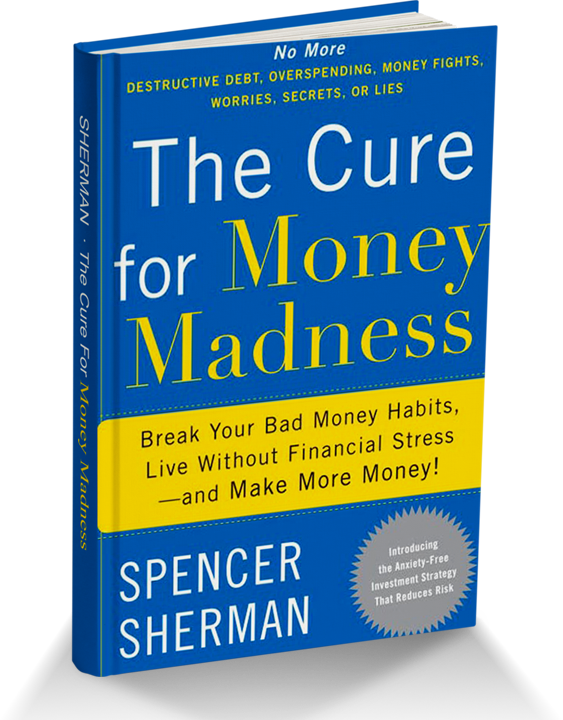
Spencer is the author of The Cure For Money Madness (Broadway Books ‘09 ), a guide to overcoming the distorted childhood perceptions of money which poison relationships, impede intimacy, and interfere with our making money and enjoying the money we have. Spencer teaches Financial Intimacy and Freedom Workshops for couples.  He is the CEO of Abacus Wealth Partners.   www.abacuswealth.com

Spencer is available for interviews, speaking engagements, and workshops worldwide. www.curemoneymadness.com

To Own or Not to Own

Posted on January 5th, 2009 in Family Groove, Real Estate | Leave A Comment

Until the financial crisis that started last fall, no one questioned the  value and importance of owning a home. But when so many people  defaulted on their mortgages, people began to see that renting is a
viable and, in some cases, preferable option.

Many of us grew up with the adage: “Renting is just throwing money down the drain.” Well, the subprime crisis has ended that delusion, and besides, it’s never been true that everyone should own a home even if they can afford one.

In boom times or in bust times, who shouldn’t own a home?

Anyone who doesn’t have a firm intention to live in the house for at least seven years.

Anyone who needs flexibility. For example, if you don’t want to limit your income potential, or want to keep your income options flexible, owning a house keeps you in one area, but the more lucrative jobs may be elsewhere.

Anyone whose marriage isn’t stable. Self-explanatory!

Anyone whose life is changing. For example, if you’re about to have your first child or about to be an empty nester, your world will change dramatically. Keep your options open while you’re in transition.

Anyone who’s arriving in a new neighborhood, job or a city should rent first before buying. In six months, you may be pining for the neighborhood your friends live in, but if you’ve bought, it’s too late. If your boss is a tyrant, renting allows you to relocate and start over—quickly.

Anyone who is disciplined enough to save money on his/her own should not buy. Most people need the forced savings of home ownership. But if you don’t, save on your own and keep your investments diversified in a mutual fund portfolio.

Anyone who must put all of their assets into a house. Putting all your eggs into one basket is never a good idea. Diversifying your assets is essential to keeping your portfolio healthy and balanced.

Anyone who doesn’t want the stress of home maintenance or doesn’t have the cash reserves for unexpected home repair/maintenance costs. Yes, roofs really do need to be replaced. Termites really can destroy your house. And paying for these services can put you into debt fast.

Anyone who prefers to use their surplus cash flow for travel, five-star restaurants or other expensive items instead of costly home repairs and improvements.

Anyone who isn’t willing to look at the numbers and rationally decide whether renting or buying makes more financial sense. Lots of people are impulse home buyers. They fall in love with that cute cul-de-sac or the master bath Jacuzzi or the sunlight pouring into the kitchen. It has to make emotional and financial sense to make a purchase this big. When looking at the numbers, include and compare everything: property taxes, utilities, short- and long-term maintenance, landscaping, insurance and commuting costs.