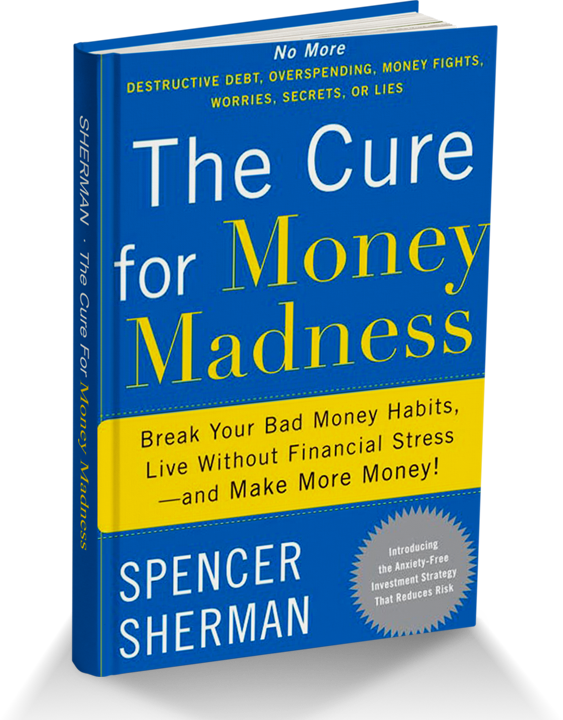





Cure Money Madness : Time to Invest

Posted on October 28th, 2008 in Community, General, Investing, Money Madness, Retirement | Leave A Comment

With Central Bank’s all over the world making the decision to buy stakes in privately held banks along with statistics showing that most investors have capitulated by the end of last week (more money was liquidated from equity mutual funds last week than any other week in the last few months, which just goes to show that left to our own devices, human beings as a group prefer to sell low than to sell high), this is an excellent time to let go of your own money madness and invest.

In other words, if we examine the investing world objectively without our emotions (which hardly ever guide us wisely in crisis situations), we find that everyone who bought in past situations like this made a fortune in the subsequent 10 years.  So instead of thinking about what might happen, think about the common sense wisdom of buying low, which has always, always worked, and buy a diversified portfolio today.

Some other blogs I found about investing now  :


TheRecord.com - Business - Manufacturer says it’s ‘the best time … - “We think this is the best time to invest,” Morszeck said. It means the company will be in a good position to take a bigger part of the market as the economy improves, he added. “We’d like to be closer to the American market where we …

Is Now a Good Time to Invest? | Cash Money Life - The world economy is a volatile place right now. Even with last week’s recent gains, the stock market is down substantially over the last few weeks and it is.

The best time to invest – your lifetime - Right timing will tell you when to get into a certain time of investment and when to get out. The question of timing also answers when it is best time to invest in a certain type of investment vehicle. Simply put, proper timing will …

Money Madness : What economic structures might help shift to sustainable living?

Posted on March 30th, 2008 in Community, Experiences | Leave A Comment

I believe that if we begin to identify our emotions around money, as individuals and as a community, we will be able to come together and build a sustainable economic platform for sustainable living. Until we can talk about our money problems, fears, and dreams, we will not be able to come together and make a truly sustainable economic structure. We need to cure our money madness!

Here is an example of money madness I experienced :

When I first started to make money, I began to wonder what it would feel like to spend it on sheer luxury—and whether that would bring some inchoate but profound change to my life. To be sure, financial security was still my foremost aim, but the wondering would not be denied.

So one day I sold my Chevy Nova and bought a BMW. I remember that as I drove it away from the dealer’s and sensed the power, felt the fine engineering, sank down into the comfort, and contemplated the image of myself driving this high-priced machine down the highway, I experienced a moment of elation.

It was, literally, a moment—and quickly over. The elation did not come back. In its place was a kind of emptiness, even a regret for the joy that had been so short-lived. In fact, arriving at the emptiness was downright painful, for I had worked so hard to feed myself this gourmet dish, had looked forward to it so much, imbuing it with the power and sanctity of a Holy Grail, only to find that it was nothing but empty calories and that the Grail was just a common cup.

Now what? I remember thinking. If the BMW isn’t enough, what is?

How much is enough—and enough for what?

Some posts on Sustainable Living you might enjoy :

Permaculture Zone 1 | Sustainable Living Wise - The next Permaculture Zone to discuss is Zone 1. This is the Vegetable Garden and close plantings to the house or dwelling. The characteristics of Zone 1 are …

Natural and Sustainable » Blog Archive » Have a more Sustainable … - *Natural and Sustainable Living Tip: If you are looking for natural remedies and preventative care, consider herbs. Herbs a natural way to get the benefits of remedies and salves without using harmful chemicals on your body or harmful …

Sustainable City Living - The book Toolbox for Sustainable City Living: A Do-It-Ourselves Guide is a collection of skills, tools, and technologies usable by urban residents wanting to have more local access and control over life’ s essential resources.

Solar Energy As A Sustainable Source Of European Economic Growth … - Green news, green products & green living tips for a sustainable future- Email us at ecofriendlymag@gmail.com. Home · Eco Friendly Shop. Solar Energy As A Sustainable Source Of European Economic Growth. Posted by EcoFriendly. Nov 26 …

No Ordinary Homestead : Best Green Blogs Directory - A blog about becoming self-sufficient, home renovation, becoming parents, living with a big, slobbery Newfoundland and learning as much as we can as we go along since we’re just getting started with life. …

Money and Peace

Posted on January 28th, 2008 in Community, Uncategorized | Leave A Comment

Many of us operate on the principle that money is somehow antithetical to peace. We talk about having jobs that are well-paying or ethical, companies that are “corporate” and therefore bad. We seek guidance from spiritual leaders who took vows of poverty and religious verses condemning the lust for money. We focus on finding tranquility by releasing our attachment to the material world, in which money plays a starring role.

But what if the truth—money vs. peace, profit vs. ethics—just isn’t that black and white?

Consider MoveOn.org. With 3.3 million members, MoveOn.org has used Internet-based, grassroots community organizing to raise many millions of dollars. Those funds have paid for things like Viacom billboards reading “Inspections Work. War Won’t.” in major cities across the country, thousands of phone calls to Congress in advance of votes on torture and the war in Iraq, and DC rallies with tens of thousands of attendees exhorting the government to take action against genocide in Darfur.

From Patagonia to the Peace Corps to The Desmond Tutu Peace Foundation, there are thousands of organizations creating and supporting peace using not just volunteers and vision, but money. Cold, hard cash. Lean, mean green. (By the way—just look at the words we use to talk about money: cold, hard, and mean!)

The fact of the matter is that money is powerful, but it’s neither good nor bad—it’s neutral. As neutral as a spoon, a wheelbarrow, a paperclip. It’s simply a tool, and like all tools, it can be used for good or ill. A hammer can crash down on your finger or build a house. Fire can burn down your garden or cook your meals. Money can generate suffering, or it can generate peace and progress; and rejecting money because it can cause suffering is like refusing a hammer while building your house because you might accidentally hit your finger.

Rather than struggle to reject money because it’s bad, embrace money as a neutral tool, only as constructive or destructive as our intentions. The nature and scope of its power directly depend on how we use it.

In our progressive communities, many of us have a negative knee-jerk reaction to money. That reaction keeps us from seeing that money creates opportunities to improve the world. When we don’t see the benevolent, constructive side of money, we reject it, and those opportunities are lost.

Get clear on the neutrality of money, and you’ll create possibilities. Possibilities lead to opportunities. Opportunities lead to change. And in the hands of the progressive community, change leads to peace.