





Money Madness : Friends At Work, But Not For Long
Posted on September 1st, 2008 in Money at Work | 1 Comment
Jeff and I had become good friends at work. He was a few years older and had put in more time at the brokerage house where I was just starting out, so in some ways, he was a mentor. But this was a real friendship, not just a “professional association” like so many relationships with work colleagues. I felt we were soul-mates under the skin, with everything important in common.
So it stunned me when, one day over lunch in Jeff’s office, he suddenly asked: “By the way, where did you summer?”
I grew up in middle-class Queens, a generation removed from the immigrant experience, and had never heard the word “summer” used as a verb. But I got it. Instantly. It was unmistakably a class code, and it was a shock to my system. In that single moment, I went from feeling intensely close to Jeff to feeling absolutely separated from him, as if a brick wall had just shot up between us. Soulmates under the skin? What was I thinking? I said to myself, when clearly, as a single word had revealed, we were as different as two people could be.
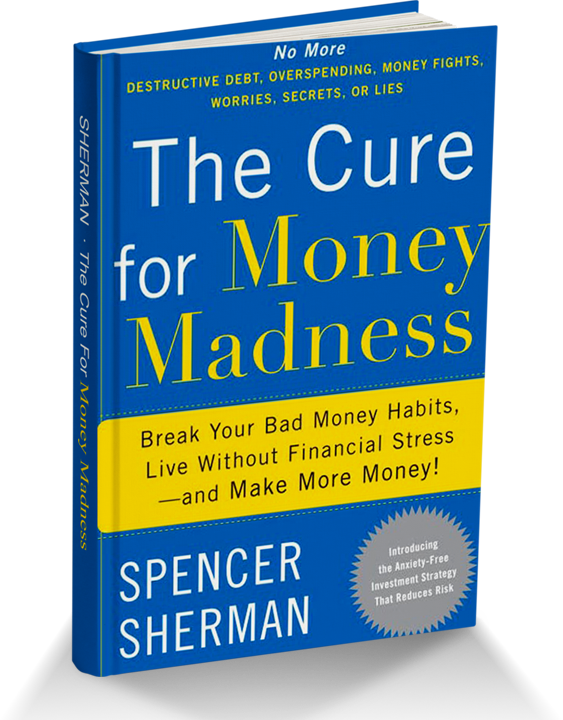
I am not the first person to feel the jarring sensation of class distinction. But my emotional reaction to this experience was something more intense-it was money madness. In that moment, I fell prey to defining my self-worth in material terms. My money madness told me that a summer spent at the public pool in our Queens neighborhood was inferior in every way to the kind of summer experienced by people who “summered” in the Hamptons, or on Cape Cod, or along the coast of Maine. And if my summer was inferior, surely my whole year was; and if my year was, surely my whole life was; and if my life was, so was I. My money madness also insisted that money was identity, maintaining that Jeff’s identity and mine could not possibly form and keep a friendship.
It was too bad. The truth is that my boyhood summers at the municipal pool had been wonderful, and if I had not been the slave of my money monster, I might have been able to say to Jeff: “I summered in the neighborhood.” I might have created space for us to learn more about each other. Instead, money madness ruled my behavior, insisting that Jeff and I should not be friends. It was painful.
But money madness will do this every time. It will make you uneasy with your identity, or unclear about what your identity is. And it will dictate how you connect with people. There’s a great story about two women who’d been close friends for 20 years. They knew everything there was to know about one another, had been there for one another’s joys and sorrows, could virtually finish one another’s sentences. Then one of the women confessed to the other that she didn’t exactly work at the Museum-that is, in the sense of having a job there. It was rather that she visited there often because she donated so much money to the Museum out of her enormous trust fund.
That was the end of that friendship, as the woman who received this information wondered what else had been held back or fudged or lied about over the past 20 years. We can only marvel at the trust-funder’s 20-year discomfort with her own money situation, even as we pity her for letting that discomfort break faith with a friend.
The irony is that there is also financial danger in letting your money madness rule your relationships. In that first brokerage job, I saw myself as less worthy because I had grown up middle class and had never “summered,” and it led to behavior that influenced others’ perceptions of me. When my colleagues headed for the nearest watering-hole after work or went out for a boisterous lunch together, I hung back. I saw myself as different, and I believed the difference made me less. It affected my performance on the job. After all, how could I look to new money associations when I was still hung up on past money associations? I was the kid who summered in the municipal pool in the neighborhood. How could I possibly make the kind of money the Jeffs of this world make? How could I even be comfortable around people like that? There’s also irony in the fact that, most likely, I wasn’t the only person in the firm for whom summer meant the municipal pool, not Martha’s Vineyard. Not only was my sense of otherness damaging and dysfunctional, it was probably inaccurate.
A friendship sundered, a job gone sour and my self-esteem thrashed. I was 25, and the score was Money Madness 3, Spencer 0.
More on money in the workplace :
|
Bringing the spirit of giving to your workplace « A Different Kind … - “Despite the difficult economy, 74 percent of companies plan to participate in charity efforts this holiday season — donating money, food, clothing, gifts, volunteering,” says Dale Winston, chairwoman and CEO of the New York-based … A Sense of Humor is Worth Big Money in the Workplace « Personal … - Today, I spoke to Adrian Gostick, a bestselling author, who gives us a lesson in the importance of humor in the workplace. He has some excellent and eye opening research for you that proves people need to loosen up in the workplace in … Workplace Communication = Money! - Has your company had a continual turnover of employees or a problem with workplace productivity? Does your company promote productive employee communication? These are extremely important questions to ask and answer. … Will Obama transform the American workplace? - It may still be two months before he is sworn in, but President-elect Barack Obama could prove a transformational leader when it comes to reform of the American workplace. —- link MoneyTalks: The Best Money, business, finance blog … |