





To Own or Not to Own

Posted on January 5th, 2009 in Family Groove, Real Estate | Leave A Comment

Until the financial crisis that started last fall, no one questioned the  value and importance of owning a home. But when so many people  defaulted on their mortgages, people began to see that renting is a
viable and, in some cases, preferable option.

Many of us grew up with the adage: “Renting is just throwing money down the drain.” Well, the subprime crisis has ended that delusion, and besides, it’s never been true that everyone should own a home even if they can afford one.

In boom times or in bust times, who shouldn’t own a home?

Anyone who doesn’t have a firm intention to live in the house for at least seven years.

Anyone who needs flexibility. For example, if you don’t want to limit your income potential, or want to keep your income options flexible, owning a house keeps you in one area, but the more lucrative jobs may be elsewhere.

Anyone whose marriage isn’t stable. Self-explanatory!

Anyone whose life is changing. For example, if you’re about to have your first child or about to be an empty nester, your world will change dramatically. Keep your options open while you’re in transition.

Anyone who’s arriving in a new neighborhood, job or a city should rent first before buying. In six months, you may be pining for the neighborhood your friends live in, but if you’ve bought, it’s too late. If your boss is a tyrant, renting allows you to relocate and start over—quickly.

Anyone who is disciplined enough to save money on his/her own should not buy. Most people need the forced savings of home ownership. But if you don’t, save on your own and keep your investments diversified in a mutual fund portfolio.

Anyone who must put all of their assets into a house. Putting all your eggs into one basket is never a good idea. Diversifying your assets is essential to keeping your portfolio healthy and balanced.

Anyone who doesn’t want the stress of home maintenance or doesn’t have the cash reserves for unexpected home repair/maintenance costs. Yes, roofs really do need to be replaced. Termites really can destroy your house. And paying for these services can put you into debt fast.

Anyone who prefers to use their surplus cash flow for travel, five-star restaurants or other expensive items instead of costly home repairs and improvements.

Anyone who isn’t willing to look at the numbers and rationally decide whether renting or buying makes more financial sense. Lots of people are impulse home buyers. They fall in love with that cute cul-de-sac or the master bath Jacuzzi or the sunlight pouring into the kitchen. It has to make emotional and financial sense to make a purchase this big. When looking at the numbers, include and compare everything: property taxes, utilities, short- and long-term maintenance, landscaping, insurance and commuting costs.

Money is Taboo

Posted on December 17th, 2008 in Family, Real Estate, Uncategorized | Leave A Comment

We’re told as we grow up that the three great conversational taboos are politics, religion, and sex, but in fact, people discuss these subjects all the time. No, the real taboo in our social discourse is money, as I was dramatically reminded this past summer.

My young son and I joined a bunch of old and new friends for a rafting/kayaking/ camping trip down the Klamath River. Of course, outdoor trips like this always speed up the process of intimacy; when you live together with others for five days—without obligations, without cell phones or PDAs, and sharing a latrine—you get to know them pretty well pretty fast. On this trip, the process moved even faster because of the forest fires that plagued northern California. The air was pungent with smoke, and the sun was always blocked, so there was a persistent sense of early dawn—a perfect setting for sharing our innermost truths, I’ve always thought.

Sarah and I had been acquaintances before the trip—my son and her daughter were pals from school—but on this trip, we grew really close. Although the fire danger meant there was a ban on campfires, we nevertheless sat and talked each evening, hunkered down in our low-slung camp chairs, our muscles weary, our kids safely in their tents. We talked about our past and present marriages, politics, religion, health, and our kids, sharing our concerns and vulnerabilities about each of these topics. It quickly became clear that ours was one of those friendships in which any subject could be fully explored.

As the trip grew to a close, we adults began to think and talk about tipping the wonderful river guides who had kept us safe through the Class 3 and 4 rapids. So on the last night, as we were settling into our camp chairs, I said to Sarah: “Have you thought about the tip? I’m thinking of giving a hundred bucks. What are you going to give?”

In the orange glow from the fires 30 miles west of us, I could see the look of stunned astonishment on Sarah’s face. “Oh,” she said, “I don’t feel comfortable discussing that.”

And that door slammed shut.

What is this? Why is money a blacklisted subject we hide behind a veil of secrecy as if we and our money were in some sinister conspiracy together? What made Sarah shut down? After all, I hadn’t asked her how much money she had in the bank or what her bonus had been last year. Nor had I suggested she tell me how many boyfriends she’d had in college or what her SAT scores had been. And the fact is that Sarah had told me some pretty private stuff about a rough patch in her marriage and about her own family history. That she could speak freely about such deeply personal matters made it even odder that she would shut down like a clam when asked what she planned to tip the next day.

What I can’t figure out is why. What makes people so uncomfortable talking about money? My guess is we see money as a measurement of our identity—and thus as a wedge that can separate us. That is, the person who “measures up” higher—i.e., with more money—feels he has to protect what he has from the person who measures up lower, while the person who measures up lower feels in danger of being exploited. I don’t know if that’s it, but when Sarah and I finally talked about her response to me, she said it was because she had indeed planned to give more than I was giving, and the difference—the separation it might define—made her anxious.

But if I don’t know exactly why we clam up about money, I do know the impact of all the secrecy: stress. And that stress makes us do stupid things in our money lives. It takes away clarity about money and cuts us off from any wisdom we might bring to our money lives. It leads us instead into a money madness that impels us toward dumb decisions about earning, spending, saving, investing, and giving money. In my own family, my father and his sister had been estranged for the last 30 years of their lives over a money secret!

I’ve been there too. I’m the guy who could talk a blue streak about my sexual history on the second date with the woman who became my wife—but for the first three years of our marriage never said a word about our assets, our debts, my income or possessions. Those were the conversational taboos I stuck to. And the dumb decisions I made as a result of that madness-driven secrecy were very costly indeed.

Yes, there are good reasons for keeping certain aspects of your money life private, but I think we’ve gone too far on the secrecy side. The money taboo has become so automatic that we no longer have a choice about whether to share or not to share details of our money life; it’s just not an option anymore. Yet most of the time, a secret or lie about money causes us stress, loses us money, and diminishes our intimacy with friends and family. That’s enough motivation for me to re-think what is the real conversational taboo—money talk.

Money Madness and Real Estate Worries : I know that my house fluctuates in value – but I don’t move out when it does.

Posted on November 21st, 2008 in Real Estate, Tips | 4 Comments

I know that my house fluctuates in value.  But I don’t stand in front of my house  month-by-month or day-by-day, let alone minute to minute watching a tickertape of my home’s value going up and down.  We all know that house values fluctuate, especially during a natural disaster like a hurricane or an earthquake.  But because I have no knowledge of the actual decrease, I don’t think about selling my house as it decreases in value.   I think, instead, that I’ll be in my house for a long time and the house value will recover over time.  Thankfully, there is no one to tell me how much my house is worth on a daily basis!  Knowing that information would, at best, ruin my sleep and at worst, provoke me to react in a financially self-destructive way.

Unfortunately, the information on the daily movements of my investment portfolio IS available to me.  Most of my money invested in the stock market is there to cover my expenses in the next 15-50 years; therefore, for some reason I think it’s critical for me to know how my portfolio is doing minute to minute.  When I log on to  financial websites or listen to the news with up-to-the-minute information on the market, the news has the illusion of being useful.  And the media is being paid by advertisers to convince us that the information IS relevant.

Some articles on Real Estate :

Now a good time to invest in real estate – Connie Knittel, a real estate broker with Pacific Pioneer Real Estate in Sandy, says she has avoided foreclosure for all of her clients. She often uses credit sources that don’t require much money down and occasionally has to pursue a …

Real Estate Blog – Stay Motivated – Real Estate Sales Is Like a … – New home sales can be like a roller coaster – sudden drops, unanticipated turns, slow climbs to the top, and breakneck speed. At all times, you must stay prepared and sustain your motivation and drive. Whether you are a new salesperson …

Money Madness and Real Estate

Posted on September 29th, 2008 in Investing, Real Estate | Leave A Comment

Jaclyn is one of the smartest women I know—and certainly one of the savviest real estate investors. Her investing success made her a wealthy woman, and she lived like one, in a sprawling, high-tech house, valued at $2.4 million, that she shared with her husband, and three stepkids. Then about a year ago, just as the real estate market was starting to skid, and with two of the kids now in college, Jaclyn and her husband sold the $2.4-million house and “downsized” to a one-million-dollar establishment. And just recently I learned that Jaclyn had sold the million-dollar-house, at something of a loss, and was hoping to rent a little place somewhere.

I was sorry to hear it, but I didn’t need to ask the reason. Clearly, with her money tied up in a portfolio of properties that were fast losing their value, Jaclyn needed cash simply to stay afloat.

“How did you escape making a similar mistake?” my wife asked after I had told her the sad news about Jaclyn.

“I learned the lesson at my mother’s knee when I was seven,” I replied: “’Don’t put all your eggs in one basket.’ Didn’t you hear that when you were a kid?”

Janine thought for only a second, then nodded.

Of course, we all learned it. In my case, I think it was when I finally got tired of always being assigned to right field when we played baseball at school. “Maybe you should try another sport,” my mother suggested. “After all, you shouldn’t put all your eggs in one basket.”

I would hear the same dictum when I devoted so much time to studying math that all my other grades suffered. And when I got on an ice cream kick and wouldn’t eat anything else. And when I developed such a crush on the tallest girl in sixth grade that I had no eyes for anyone else. “Don’t put all your eggs in one basket,” my mother repeated as I sank into each of these disasters. “Keep your eye on the big picture. It’s a varied world out there.”

That is precisely what Jaclyn forgot. A business school graduate and an expert in all the complexities of real estate investing, she neglected this simple wisdom from childhood—and she put all her investing eggs into the real estate basket.

Does this mean that investing in real estate is a bad idea? On the contrary. It is a very good idea. As investment categories go, real estate, over ten-year periods, is typically a very good investment. What’s more, through the power of leveraging, real estate investing offers the potential advantage of “multiplied” gains, although that entails the risk of multiplied losses as well. That is, if you borrow money to invest in real estate—as most people do, putting up a portion in cash and the rest as debt—your returns are magnified on both the upside and downside. If the property increases in value, your gains are greatly multiplied because you’re getting a return on the whole amount invested, even though you only laid out a small portion from your own money. But if the property decreases in value, your losses are also multiplied: you’re responsible for the debt as well as the lost value.

That’s what happened to Jaclyn. And it happened, not because she was naive or because real estate is a bad investment; neither is true. It happened because she forgot the childhood wisdom about not putting all your eggs in one basket. In investment terms, she concentrated all her resources in only one asset class; that’s why she’s hurting today.

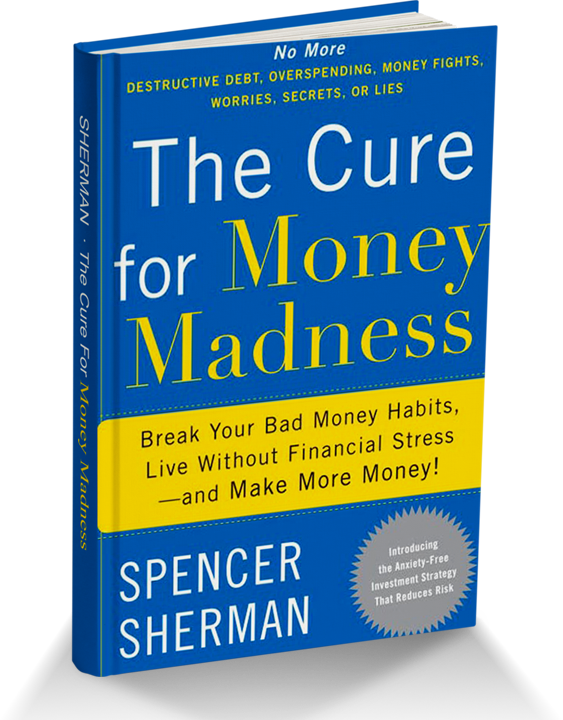
What’s an asset class? Here’s how I define it in my upcoming book, The Cure for Money Madness: “An asset class is simply a group of investments with similar characteristics such that the investments behave the same way in the marketplace.” Specifically, the companies have similar size and growth characteristics, and so they behave similarly as investments. Large, fast-growing companies—Microsoft , Nissan, General Electric, and FedEx, for example— behave similarly to one another, even though they represent different industries. By the same token, small, slow-growing companies behave, as investment assets, like other small, slow-growing companies; stocks in small manufacturing companies, for example, no matter what the companies manufacture, tend to go up and down together.

So do real estate investments. They rise or fall in value as a class, as recent events illustrate: when mortgage money was readily available, demand for houses, to take just one example, outstripped supply; house values rose, and investors in housing made fortunes. As they did so, the investors’ tendency was to ply their gains back into more real estate investing, concentrating in this one asset class even more.

That’s what Jaclyn did, and for a good number of years, as her leveraged gains registered as nothing less than spectacular, plowing everything back into this one asset class must have looked like a good idea. Maybe Jaclyn grew giddy on this soaring wealth, and maybe the giddiness seduced her into concentrating more and more resources in these persistently rising investments. It was Jaclyn’s money madness gone wild; she was hitting not just home runs but grand slams on every at-bat, and it must have seemed to her that nothing could go wrong.

I think that kind of madness is just human nature. We stop thinking when we’re on a high; we stop seeing things clearly. By the same token, when we’re low, we see too sharply and narrowly, and think too much. If only there were a mechanism to keep us level—at least where investing is concerned: to stop us when we’re carried away by some infatuation or other, and to move us along when we’re stuck in a rut.

There is. It’s the Rainbow Portfolio™, and I created it for just these reasons: to stop me in my tracks when I get giddy and to keep me going when I get low. In both cases, the Rainbow Portfolio™ is a fail-safe mechanism that automatically reminds me of what I learned at my mother’s knee.

Had Jaclyn been a Rainbow Portfolio™ investor, for example, it would have forced her to take some of his gains and diversify into other assets—large- and small- and medium-cap stocks, international and domestic, value and growth stocks, commodities and bonds. Automatically, the losses she is suffering today in her real estate investments would have been offset, or at least mitigated, by gains from other investments. What’s more, instead of being forced to sell her family home, as she must now do, she’d be able to stay put, despite the house’s dwindling value.

That’s why ‘Don’t put all your eggs in one basket’ is the most basic, most profound, most important investment mantra there is. It even trumps that other classic, ‘Buy low, sell high.’ Another friend is a case in point.

I’ll call him Frank. Like Jaclyn, he was a real estate investment wizard. So stunning was his fast climb to wealth that he actually disdained the kind of investing I advise, and we used to kid one another about our opposing investment ideas—mine for multi-asset, passive investing, Frank’s for go-getter, highly leveraged investing in real estate.

Until the day, not too long ago, when Frank phoned to say he was desperate. Plunging real estate values were reducing his net worth steadily and substantively. He did not know where to turn or what to do. What could I advise?

“How much of your portfolio is in real estate?” I asked.

Frank did some quick figuring. “Ninety-six percent,” he said.

I gulped. “Sell,” I said.

“But I’ll lose a fortune selling at the bottom of the market!” Frank protested. Such an idea—selling low, especially after having bought fairly high—was simply anathema to him, schooled, as we all are, in the principle of buying low and selling high. It’s an important principle, but in Frank’s case, it clearly came in second to the eggs-in-the-basket principle. Simply put, it is better to sell low and diversify than to have nothing at all.

So I refrained from mentioning that Frank was losing a fortune anyway. Instead, I argued that with that much concentration in a single asset, he was looking not just at loss but at wipe-out. “The first thing you need to do is avoid total disaster,” I asserted, “and that means reducing your real estate allocation from ninety-six percent to fifty percent. That way, even though it’s painful to sell at a loss, reinvesting what you earn on the sale might very well make you more money in the future. So for now, sell.”

Two friends who hit fantastic heights with their investing have now plunged to unexpected depths. The fault was not in the asset they invested in but in the concentration on that asset to the exclusion of others. The fact is that there are some simple rules about money that keep us safe and, like smoke alarms, alert us to impending disaster. When our money madness makes us giddy, luring us into thinking we just can’t miss, it becomes easy to forget the rules—and such forgetfulness is fuel on the fire.

Jaclyn and Frank forgot the simple rules—and were badly burned. They abandoned the wisdom we all learned as children: in investing, as in all of life, it pays to embrace the world’s infinite diversity.

It’s a reminder that now may be a good time to count how many baskets your eggs are in…

Some blogs you might find interesting on Real Estate :


Real Estate Blog – Smart Tips for When to Buy a Home – Search for any article on real estate lately and you will read a lot of doom and gloom scenarios. While it is true that the real estate market is struggling overall, there are some top tips to consider before you purchase a home, …

Realty Times – Green Building is Growing Despite Down Market … – Real Estate News And Advice – Green Building is Growing Despite Down Market, According to Report from McGraw-Hill Construction. … Are Foreclosures a Good Investment? Investor Report: Avoid Over-Improving · Holiday Wish List …

Real Estate Blog – Smart decisions to make before investing in a … – Smart Decisions to Make Before Investing in Down Market Real Estate Sure, you want to invest in a down real estate market, but you want to do it smartly; being stupid got people into a lot of hot water recently and you are not stupid.